
Timber
Wet Rot
Wet rot is more common than dry rot and stays localised to timber that's in continuous contact with moisture, but left untreated, it will still weaken and eventually destroy the affected timber.
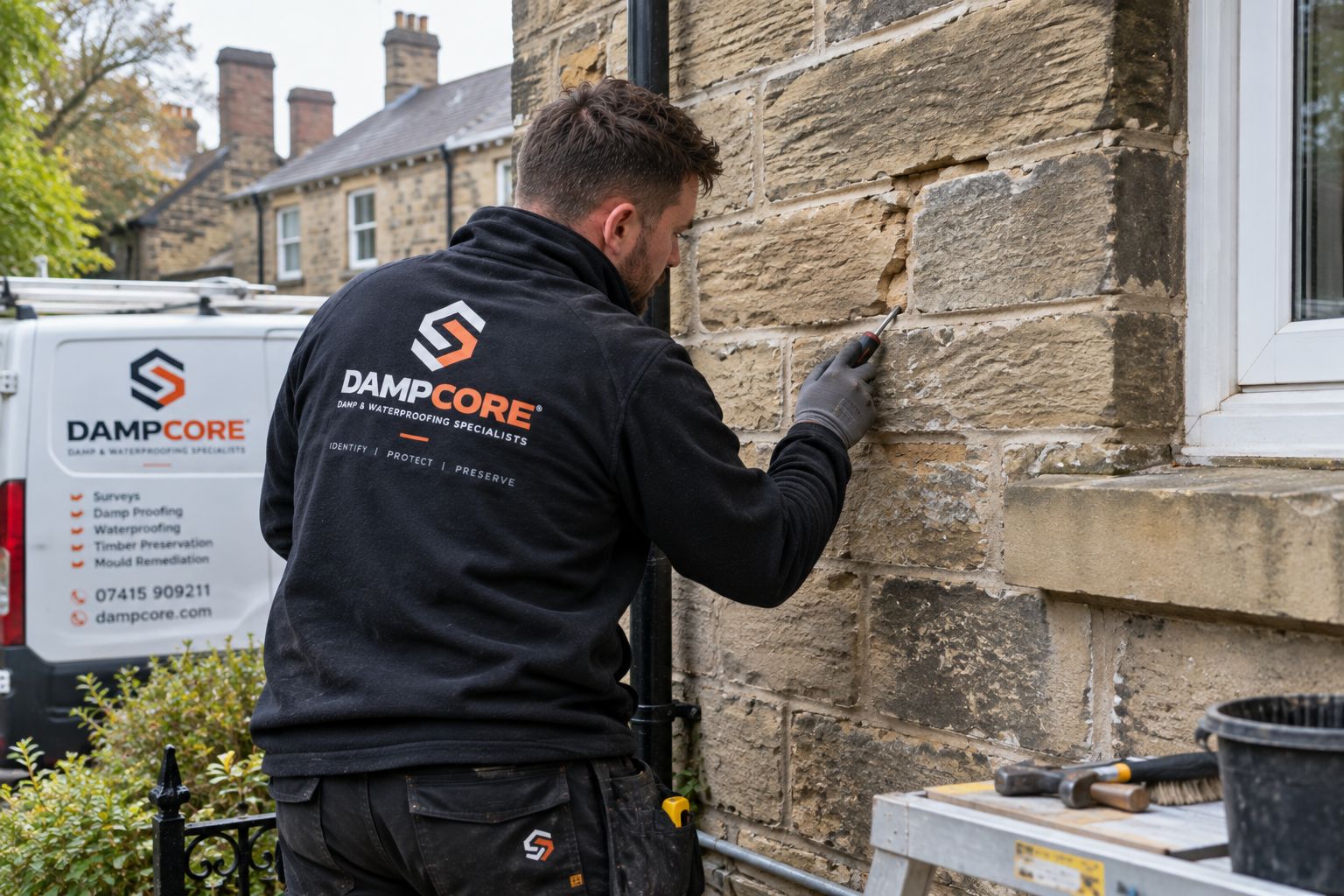
Why wet rot stays where the moisture is
Unlike dry rot, wet rot fungi need consistently damp conditions to survive and spread, so an outbreak generally stays confined to the timber directly affected by the moisture source: a leaking gutter above an external door frame, or a window sill with failed sealant, for example. Removing the moisture source is often as important as treating the timber itself.
Common signs to look out for
Timber that's soft, spongy or crumbles when pressed
Dark staining or discolouration on the timber surface
Visible fungal growth in more advanced cases
A musty smell localised to the affected area
Timber decay clearly linked to a known leak or damp source
Paint or varnish that's blistered or lifted from the timber below

How We Help
How we treat wet rot
Because wet rot is moisture-dependent, treatment isn't complete until the source of that moisture has also been addressed.
- Confirming wet rot rather than dry rot or another decay type
- Removal of the affected timber section where structurally necessary
- Repair or replacement with suitably treated timber
- Identifying and resolving the moisture source causing the decay
What our customers say
“Really straightforward from start to finish. We had a damp patch in the dining room that we'd painted over twice and it kept coming back. They explained where the moisture was actually coming from and what needed doing. No hard sell, which I appreciated.”
James · Roundhay, Leeds
“Had a musty smell and plaster starting to go near the skirting. I hadn't got a clue whether it was a leak, rising damp or what. They found the cause and showed me exactly what they'd found. That's what I wanted really — an answer rather than guesswork.”
Ben · Meanwood, Leeds
Book a Survey
Get a clear answer, not a guess.
Book a DAMPCORE damp survey and find out exactly what's happening in your property.
Frequently asked questions
Is wet rot less serious than dry rot?
Can I just replace the affected timber myself?
Related services
Concerned about this in your property?
Start with a professional assessment and understand exactly what you're dealing with.