
Surveys
Damp Surveys
An independent, evidence-based assessment of what's actually causing a moisture problem in your property: before anyone recommends what to do about it.
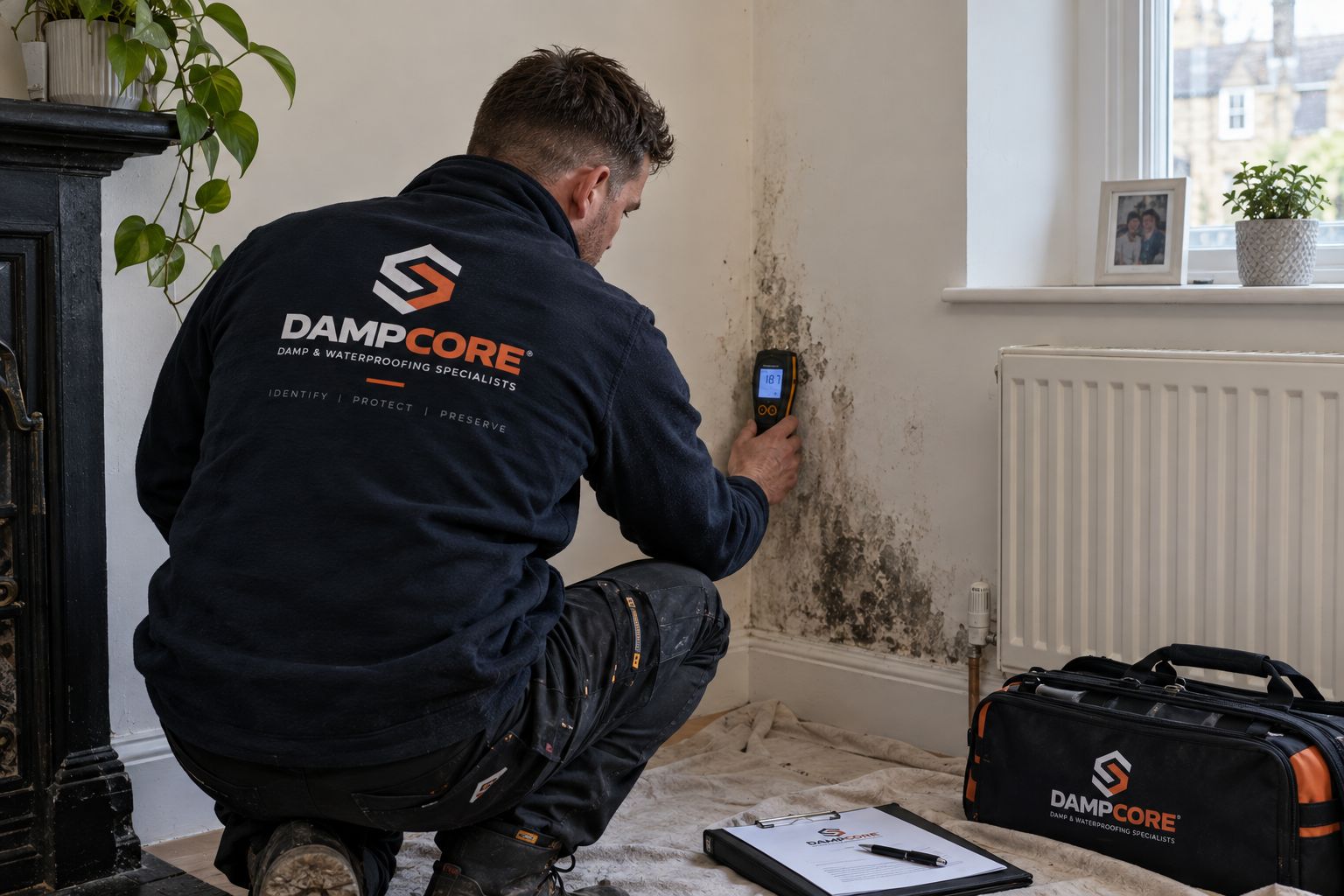
Why a survey comes before a solution
Damp shows up on the surface (staining, mould, peeling paint, a musty smell) but the same symptoms can be produced by several different underlying problems. Rising damp, penetrating damp and condensation can all leave broadly similar marks on a wall, and the correct treatment for one can do nothing at all for another. A DAMPCORE damp survey exists to answer one question properly: what is actually causing this, in this property, right now.
Common signs a damp survey can help with
Tide-marks or staining on internal or external walls
Black mould that returns after cleaning
Peeling paint, bubbling wallpaper or crumbling plaster
A persistent musty smell, particularly at low level
Visible water, or damp air, in a cellar or basement
Soft, discoloured or damaged skirting boards and timber
A tide-mark around the lower section of a wall can be associated with rising damp, although other moisture sources can produce similar symptoms, which is exactly why an on-site survey matters more than a guess from a photograph.

The Investigation
How DAMPCORE investigates a damp problem
A DAMPCORE survey is a structured, on-site investigation rather than a quick look and a quote. Depending on the property, it typically includes:
- A visual inspection of affected internal and external areas
- Moisture readings taken at wall, floor and skirting level
- Assessment of ventilation, heating patterns and likely condensation risk
- A check of external building fabric: pointing, render, gutters, ground levels
- Inspection of any exposed or accessible timber for signs of decay
Diagnosis
What you get at the end of a survey
A clear, written explanation of what was found, what it means, and what (if anything) should happen next.
Findings are set out in plain English rather than trade shorthand. Where the cause is straightforward, that's stated plainly. Where more than one factor is contributing (which is common in older properties) that's explained too, rather than collapsed into a single simple answer for convenience.
Your survey report typically covers
- The likely cause(s) of the moisture identified
- Supporting evidence: readings, photographs, observations
- A recommended course of action, where one is warranted
- Any areas that need monitoring rather than immediate work
Associated damage worth checking for
Persistent damp can, over time, affect more than decoration: plaster, timber skirting, joinery and, in some cases, structural timber can be affected. Part of a proper survey is checking whether a moisture problem has caused any damage beyond what's immediately visible, so nothing is missed and nothing is assumed.
Why correct diagnosis matters
Remedial work specified against the wrong cause rarely solves the problem: it can mean unnecessary disruption and cost, and the original symptom returning once the work is finished. Starting with a proper diagnosis is what makes the remedial stage, if one is needed, actually work.
Relevant project
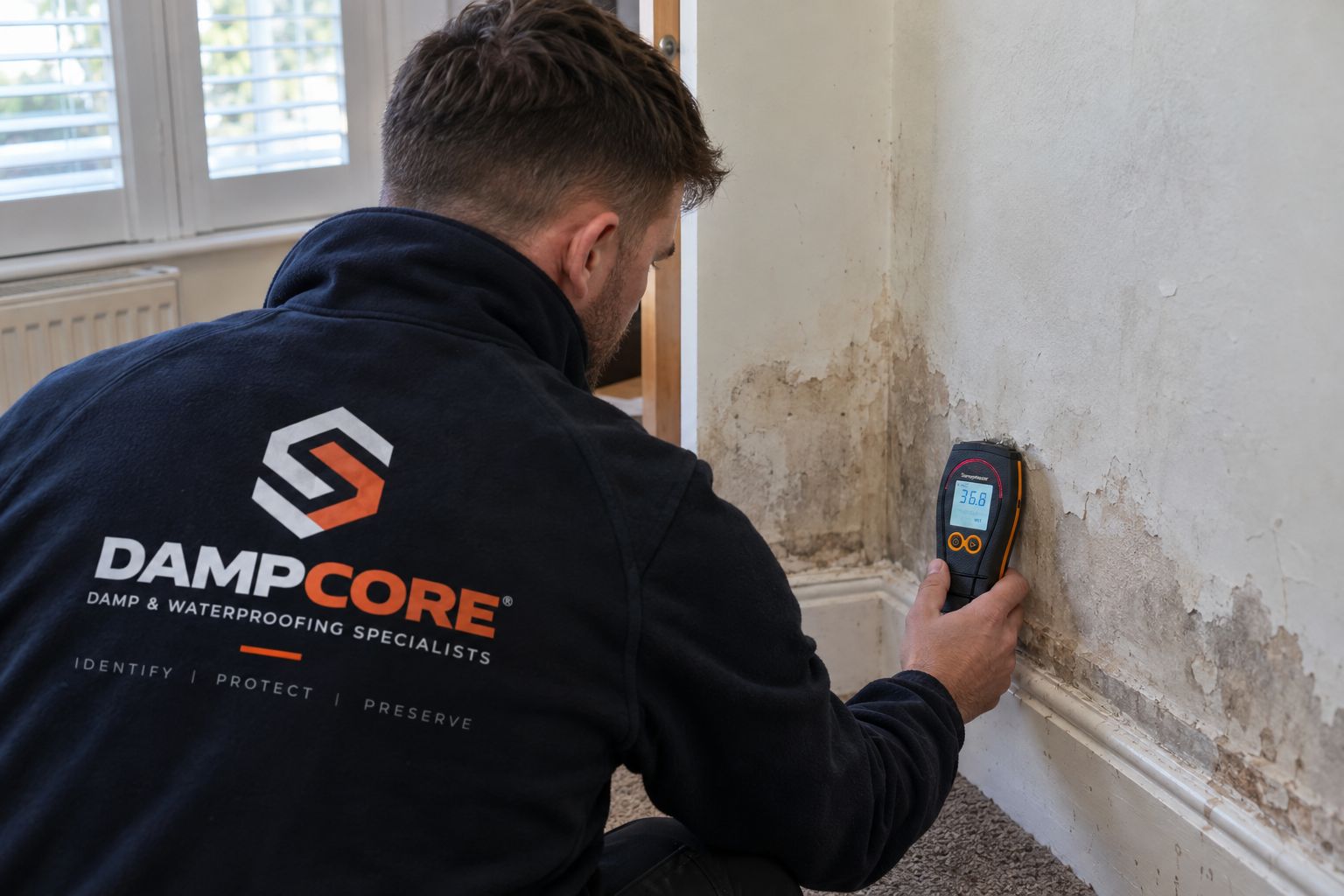
Victorian Terrace, Leeds
Leeds, West YorkshireBook a Survey
Get a clear answer, not a guess.
Book a DAMPCORE damp survey and find out exactly what's happening in your property.
Frequently asked questions
How long does a damp survey take?
Is a damp survey the same as a damp proofing quote?
Will I be pressured to book remedial work after the survey?
Do you survey properties before purchase?
Related services
Concerned about damp in your property?
Start with a professional assessment and understand exactly what you're dealing with.