
Damp Problems
Rising Damp
Rising damp is moisture drawn up from the ground through a wall's structure. It's one of the most talked-about (and most over-diagnosed) damp problems in older UK housing.
What actually causes rising damp
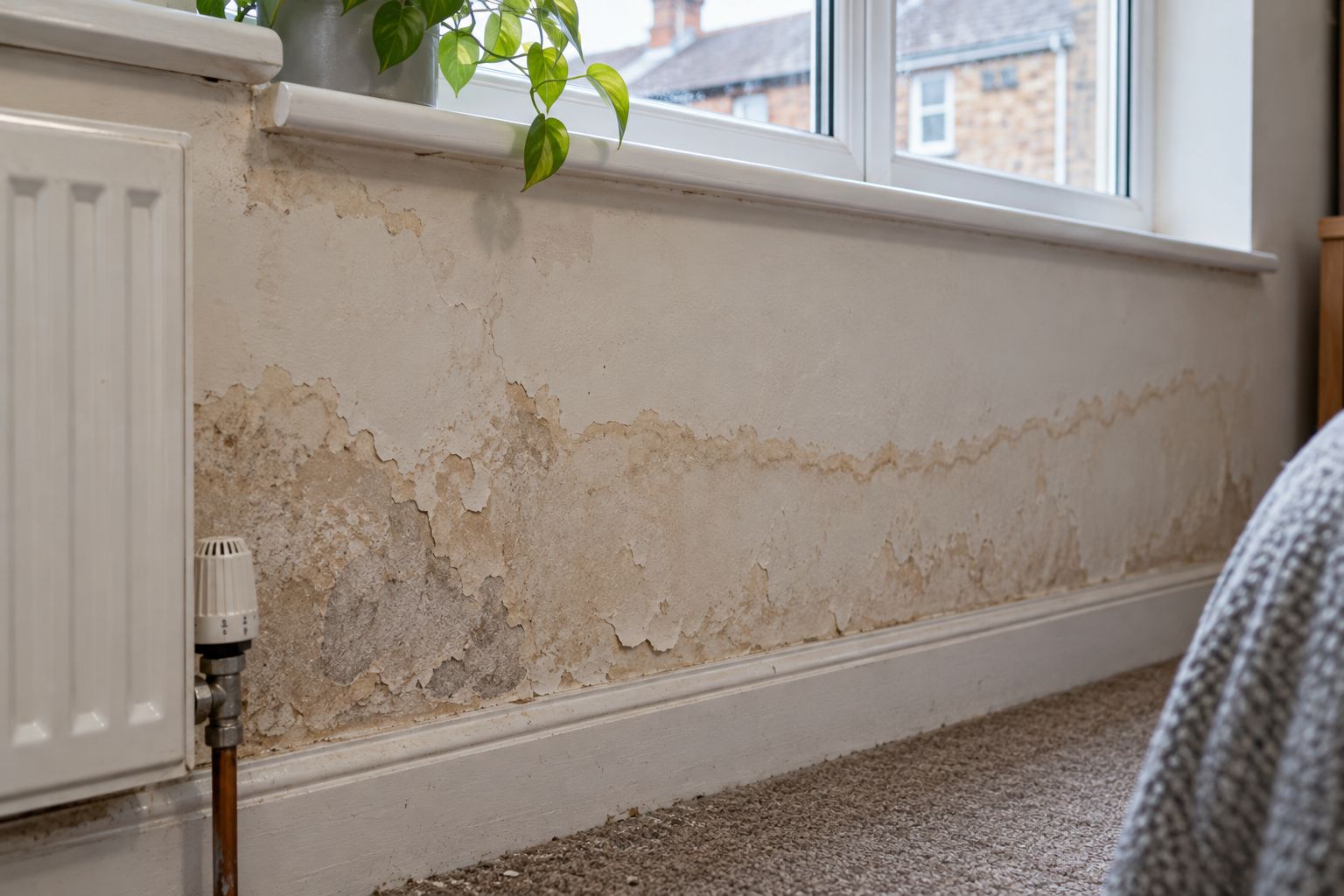
Rising damp occurs when ground moisture travels upward through a wall by capillary action, usually because a property's damp-proof course (DPC) has failed, was never installed, or has been bridged: for example by render, a raised flower bed or a path built up against the wall. It typically affects the lower metre or so of a wall and is far less common than it's often assumed to be; many cases referred to as rising damp turn out, on inspection, to be penetrating damp or condensation instead.
Common signs to look out for
A tide-mark, usually below around one metre, on an internal or external wall
Crumbling or powdery plaster near skirting-board level
Salts (a white, crystalline deposit) on the wall surface
Skirting boards that feel soft or have visibly deteriorated
A musty smell concentrated at low level in a room
Damp patches that persist regardless of the weather outside
These signs alone don't confirm rising damp: penetrating damp and condensation can produce similar staining. That's why diagnosis has to happen on-site, with readings, not from a description.
How We Help
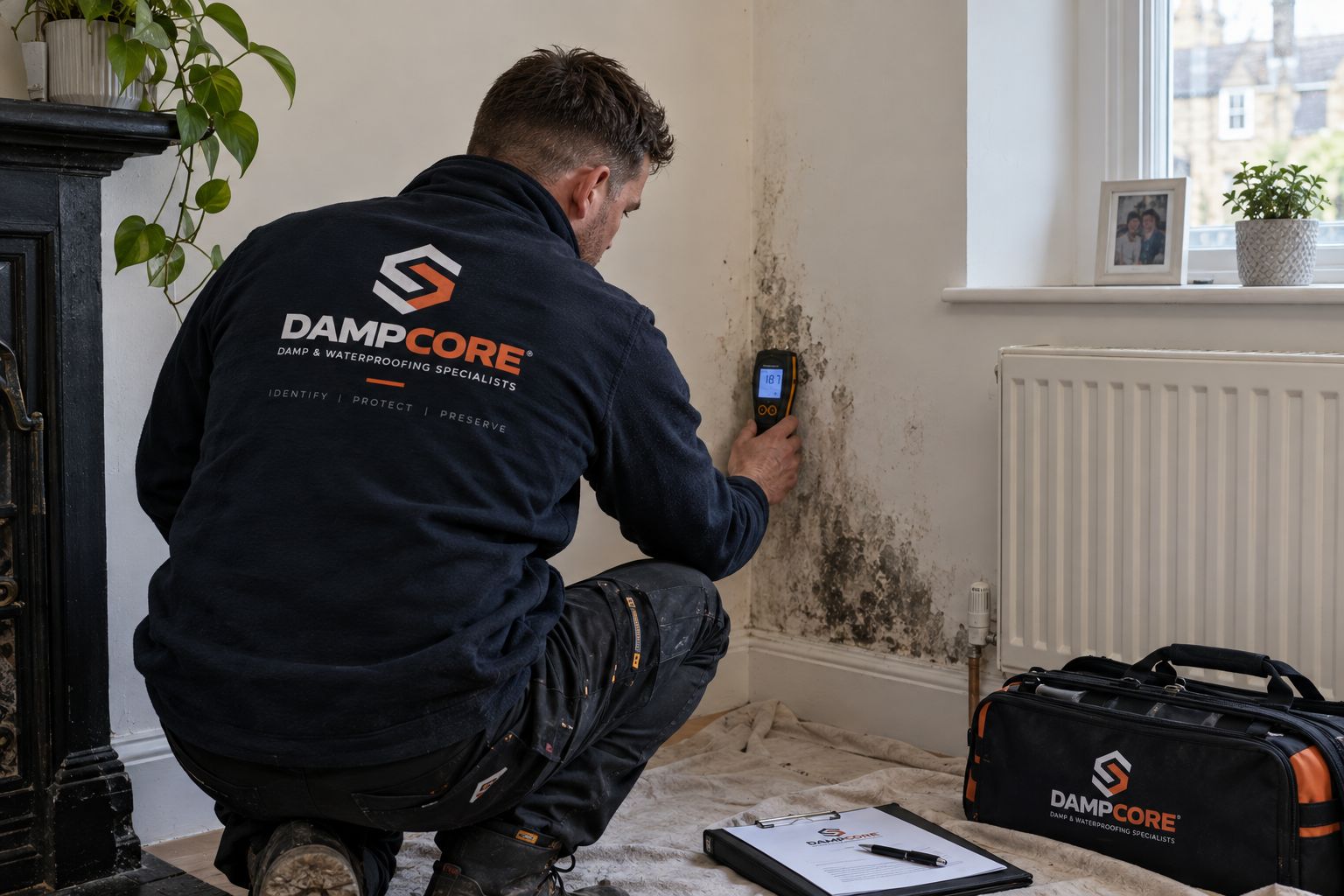
How DAMPCORE diagnoses and treats rising damp
Because rising damp is frequently misdiagnosed, our process starts with ruling other causes in or out before any treatment is proposed.
- On-site moisture readings taken at multiple heights to establish the pattern of the damp
- A check for a bridged or missing damp-proof course, and for external causes such as raised ground levels
- Where rising damp is confirmed, a remedial damp-proof course and associated re-plastering specification
- A written report explaining the finding: including where the cause was found to be something else entirely
What our customers say
“What impressed me most was that the surveyor disagreed with what we'd previously been told. Another company had quoted for rising damp treatment but DAMPCORE believed the issue was penetrating moisture around the window and external masonry. We dealt with that and the wall has been drying ever since.”
Nicola · Horsforth, Leeds
“We had damp showing along the bottom of an internal wall and initially assumed it was coming from outside. The survey was much more thorough than I expected. Readings were taken at different heights and the construction of the wall was considered before anything was recommended. Very professional.”
Martin · Harrogate
Book a Survey
Get a clear answer, not a guess.
Book a DAMPCORE damp survey and find out exactly what's happening in your property.
Frequently asked questions
How do I know if it's rising damp and not something else?
Does a damp-proof course fix rising damp immediately?
Can rising damp go away on its own?
Related services
Concerned about this in your property?
Start with a professional assessment and understand exactly what you're dealing with.