
Damp Problems
What Type of Damp Do I Have?
Rising damp, penetrating damp and condensation can all leave similar-looking marks. Here's a practical way to narrow it down, and why a survey is still the only way to be certain.
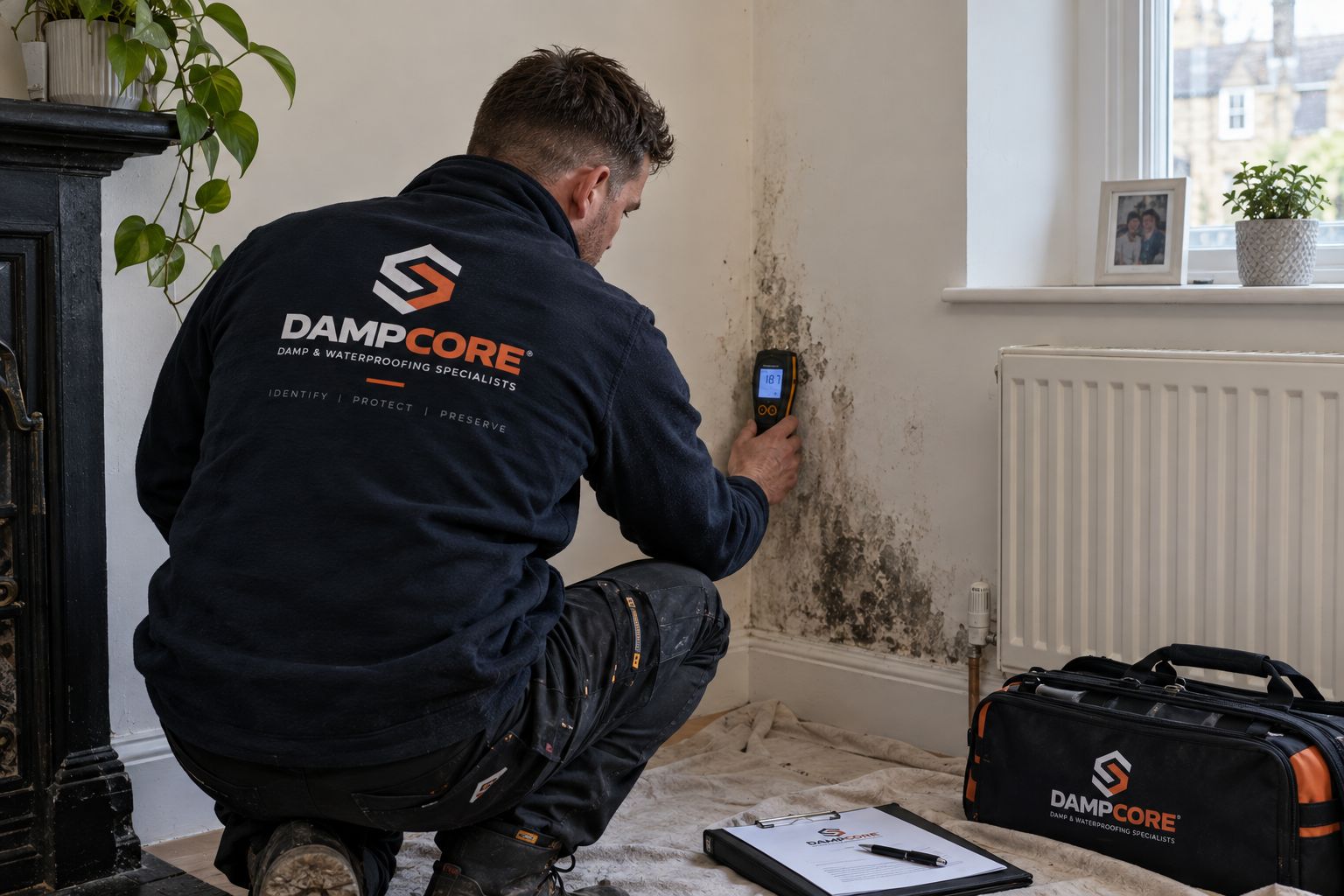
Start with where (and when) it appears
The location, height and timing of a damp patch are your best free clues. Damp confined to roughly the bottom metre of a wall, worst near skirting level, points towards rising damp. Damp that appears or worsens specifically after rain, or sits below a known roof or gutter defect, points towards penetrating damp. Damp concentrated on cold surfaces (single-glazed windows, external corners, behind wardrobes), especially worse in winter, points towards condensation.
Three quick questions to ask yourself
Is it only in the lower ~1m of the wall? → More likely rising damp
Does it get worse specifically after heavy rain? → More likely penetrating damp
Is there visible condensation on windows nearby? → More likely condensation
Is there a musty smell with no obvious wet patch? → Could be a hidden leak or timber decay
Does the mark follow a roof line, pipe run or window reveal? → Likely a specific defect, not rising damp
Does it improve with better ventilation and heating? → More likely condensation
This is a starting point, not a diagnosis. Several of these causes can overlap in the same property, and rising damp in particular is diagnosed far more often than it actually occurs.
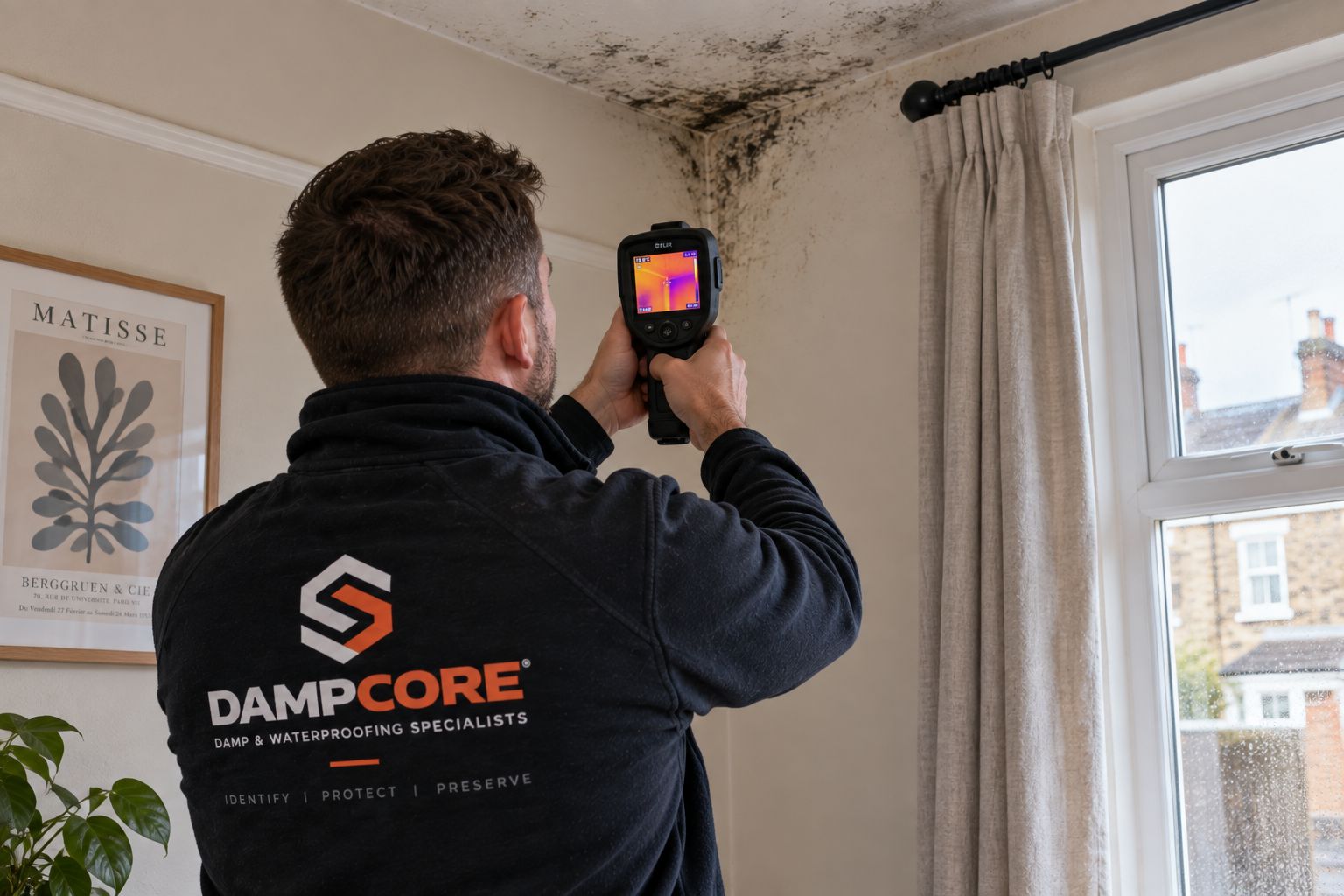
How We Help
Why a survey settles it properly
A DAMPCORE damp survey combines moisture readings, thermal imaging where useful, and a physical inspection of the property's construction to reach a conclusion the checklist above can only point towards.
- Moisture readings at multiple points and heights, not a single spot check
- An external inspection alongside the internal one
- A written report explaining the finding in plain English
- A recommendation, or confirmation that no remedial work is actually needed
What our customers say
“Thought we had rising damp. Turns out we didn't. That alone probably saved us a fair bit of money. Nice to deal with someone who isn't trying to sell you work you don't need.”
Tom · York
“Honestly just relieved to finally know what the problem is. We'd had three different opinions from three different people. The survey actually made sense of it all. Really friendly as well.”
Amy · Headingley, Leeds
Book a Survey
Get a clear answer, not a guess.
Book a DAMPCORE damp survey and find out exactly what's happening in your property.
Frequently asked questions
Can I self-diagnose with a moisture meter from a hardware shop?
What if more than one type of damp is present?
Related services
Concerned about this in your property?
Start with a professional assessment and understand exactly what you're dealing with.