
Advice
How can you tell if you have rising damp?
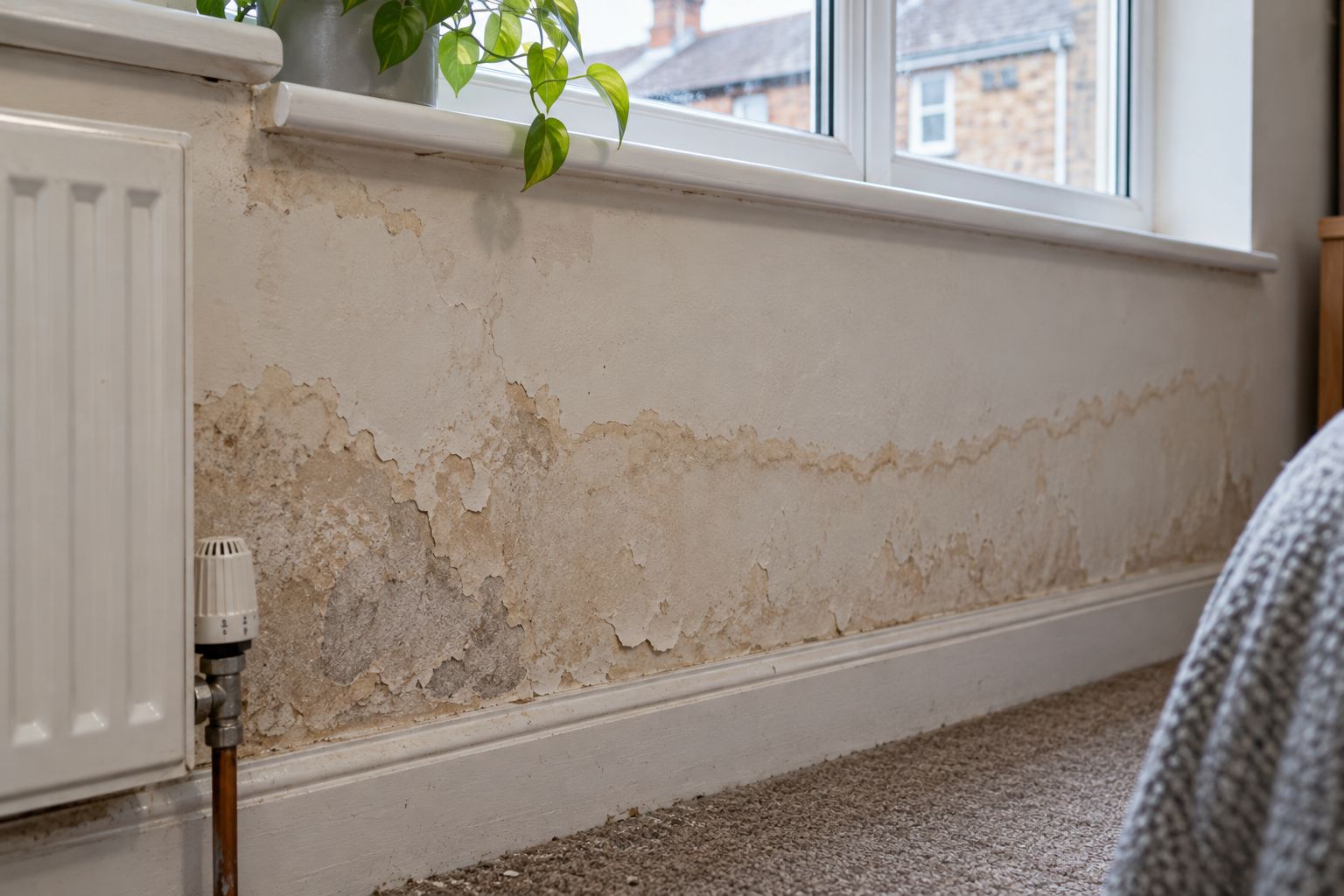
The short answer: height and pattern are your best clues
Rising damp travels upward from the ground through a wall's structure, so it's almost always confined to roughly the bottom metre of a wall: rarely higher. If you're seeing staining, mould or damage well above that height, rising damp becomes a much less likely explanation, whatever the wall looks like.
What genuine rising damp tends to look like
A tide-mark (a horizontal band of staining, often with a slightly irregular top edge), is the classic sign, usually accompanied by crumbling or powdery plaster and, in some cases, a white, crystalline salt deposit on the surface. Skirting boards in the affected area may also feel soft or show visible deterioration.
Why it's so often misdiagnosed
Penetrating damp and condensation can both produce staining that looks superficially similar to rising damp, especially in older solid-wall properties. A damp patch near floor level caused by a leaking gutter, a blocked air brick, or condensation pooling in a cold corner can all be mistaken for rising damp by someone going on visual appearance alone, which is a large part of why rising damp has a reputation for being over-diagnosed by non-specialists.
The only reliable way to know for certain
A proper diagnosis combines moisture readings taken at multiple heights with a check of the property's construction: specifically, whether the damp-proof course is present, intact and not bridged by external ground levels, render or a path built up against the wall. This is what a damp survey establishes, and it's the only way to move from 'this looks like rising damp' to an actual, evidence-based answer.
Frequently asked questions
Can I test for rising damp myself with a cheap moisture meter?
Is rising damp common in modern houses?
Want a definitive answer for your property?
A DAMPCORE damp survey establishes the actual cause on-site.